MOTHERSHIP
Agent Surface

How to make your software agent-native.

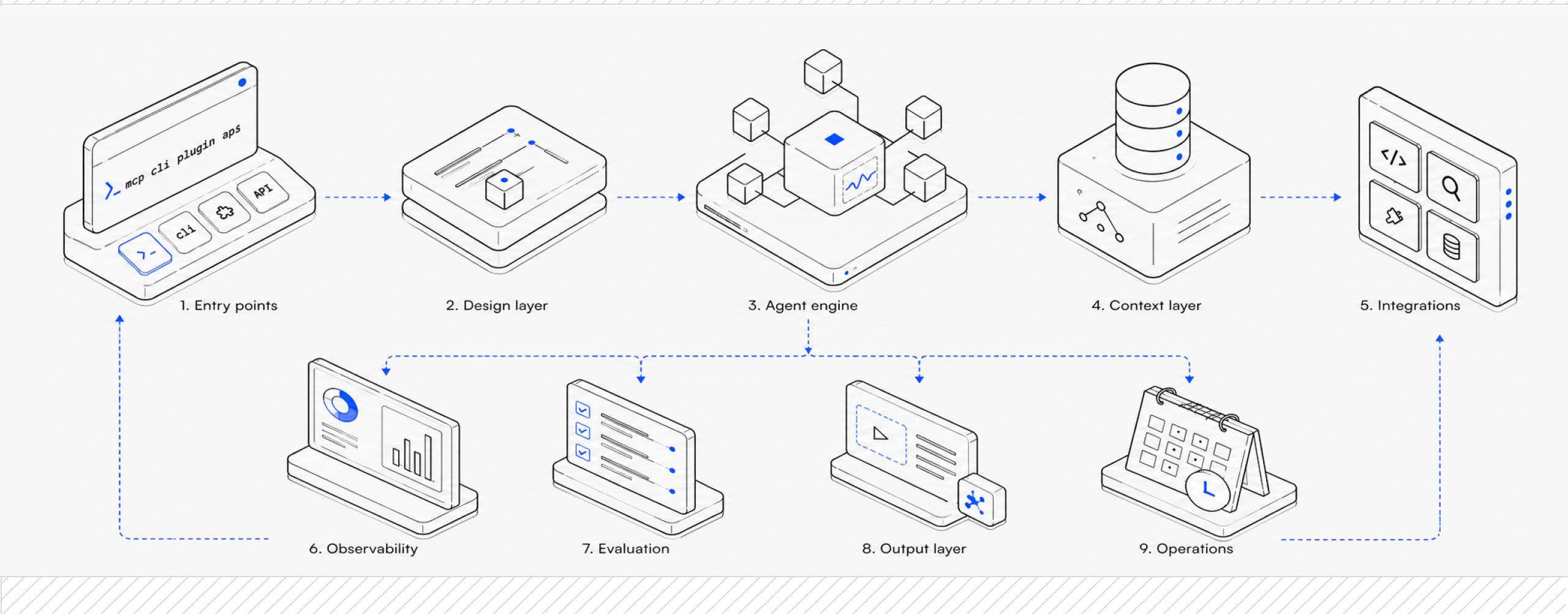
MCP, CLI, plugin, and API design treated as one artform. The rule: make the agent powerful without making its tool surface huge, and without putting engine code on the user's machine. Developed on Sacred Studio, our AI-native video tool, operated daily by human artists and AI directors. Now the discipline behind every Mothership deployment.

1
outside artist: install to production, unassisted
9
cockpit tools while the registry grows
100%
of writes validated and rollbackable
0
engine code on the artist's machine

How it works.

We do the unglamorous work first. Then the AI work becomes obvious, scoped, and shippable.

A production graph is too risky for raw access.

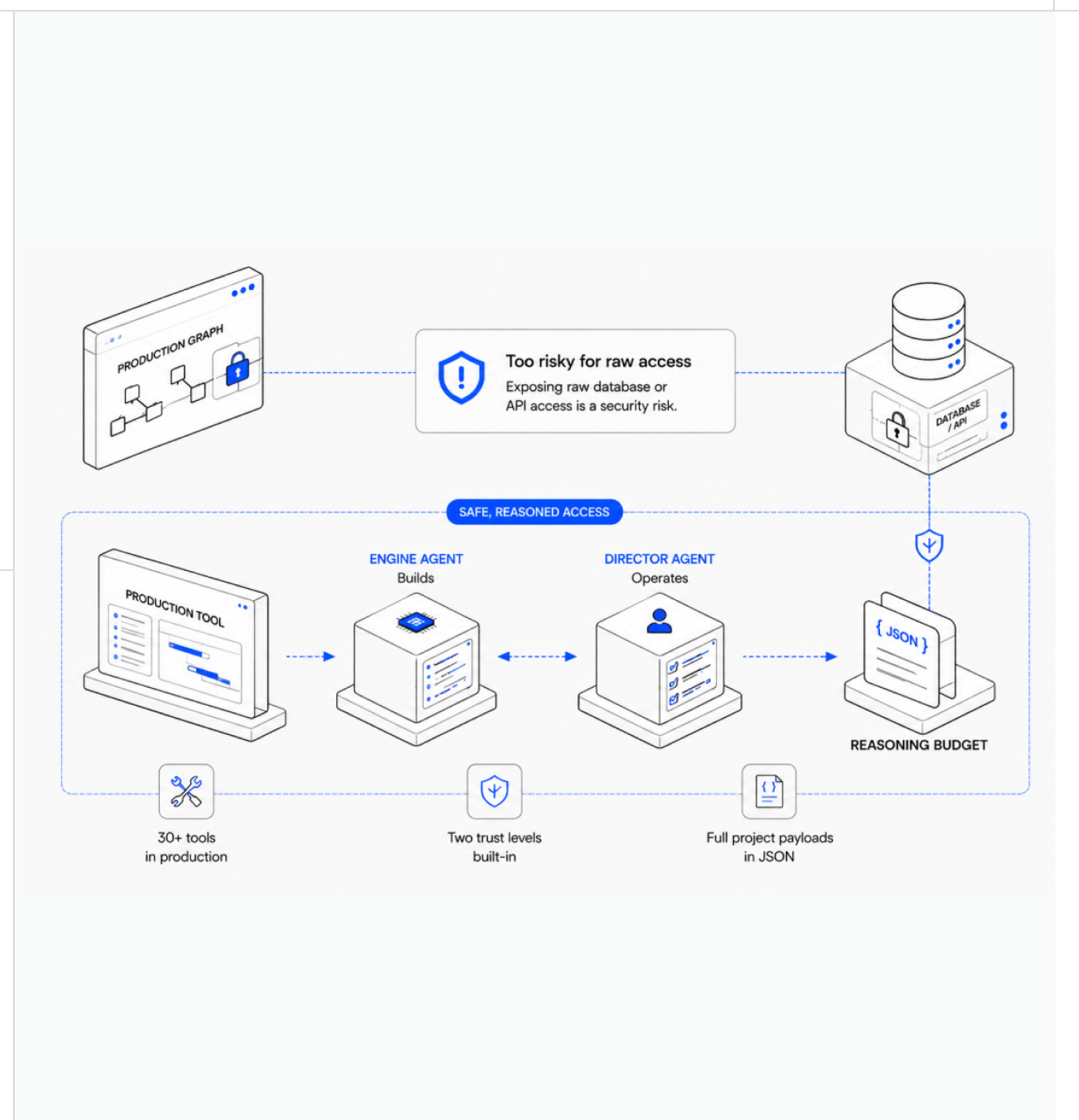
Artists needed a creative director agent inside a real production tool: one that can read a project, reason about it, and act on it. But a production graph is far too risky to expose as raw database or API access, and building your own chat harness means racing the labs at their own game forever.

  • Tool bloat is real: past about 30 tools, tool-picking accuracy measurably degrades
  • Full project payloads drown the reasoning budget in JSON
  • Two agents, two trust levels: the engine agent builds it, the director agent operates it

A cockpit, not a control room.

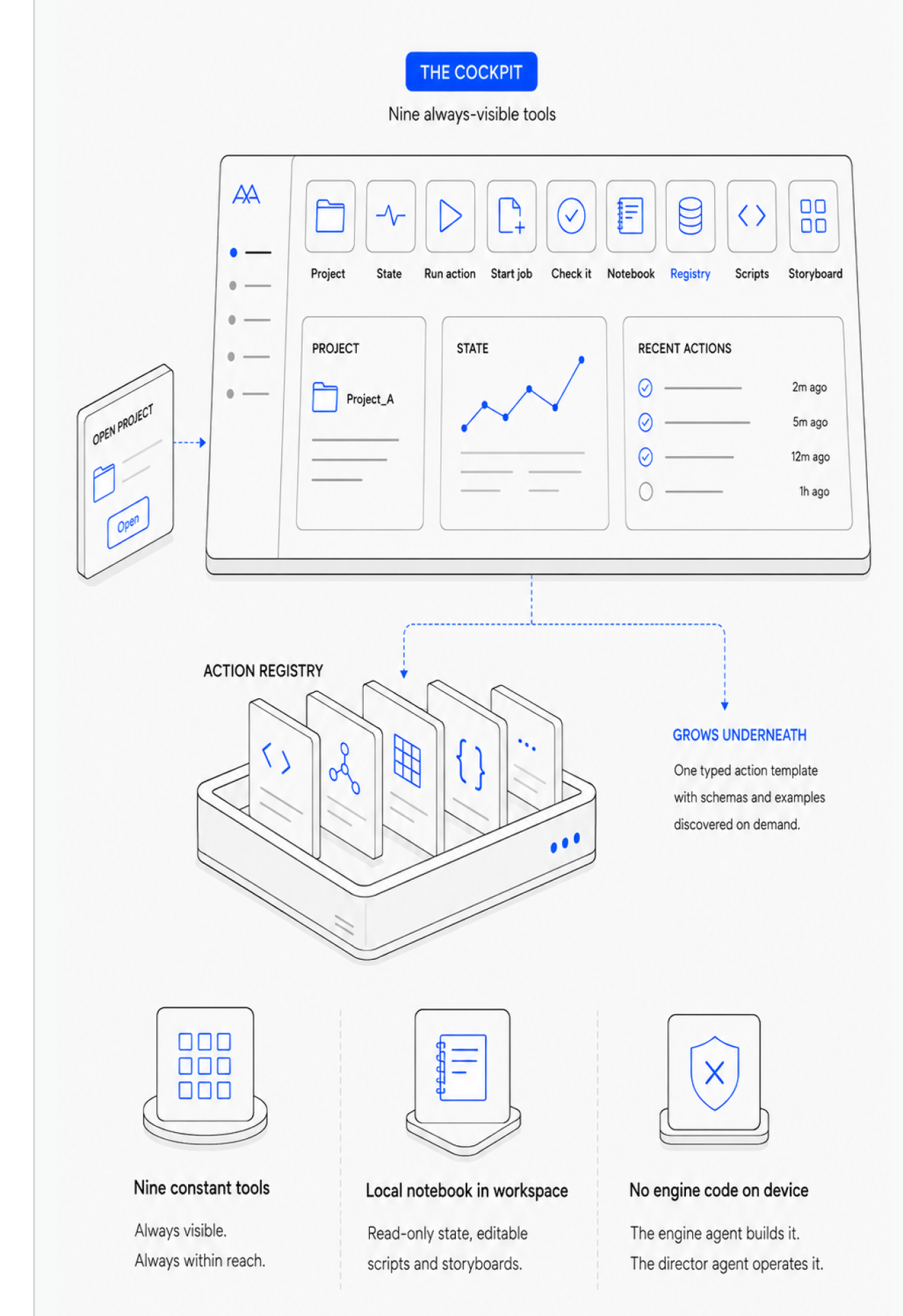
The always-visible surface collapsed to nine tools: open a project, read state, run an action, start a job, check it. Underneath, an action registry: one typed action template instead of hundreds of bespoke tools, with rich schemas and examples discovered on demand instead of riding in context on every call.

  • Nine constant tools while the registry grows underneath
  • A local notebook in the workspace: read-only state, editable scripts and storyboards
  • No engine code ever touches the artist's machine
Writes are earned, not assumed.

Text is harness-native, media is tool-backed. If the task is reasoning or writing, the agent's own model authors it and persists through a typed apply; you never pay twice for text. If it costs money or mutates state, it goes through a typed action or an async job, where it can be validated, priced, and audited.

  • Every write drift-checked; the tool refuses rather than silently clobbering human work
  • Bytes travel the data plane: HTTP uploads that return asset IDs
  • Paid generation runs as asynchronous jobs a timeout cannot orphan

Harness-native, never siloed.

Built to be Codex, Claude Code, and Cursor native: a plugin that packages identity, skills, and connection, with OAuth onboarding measured in minutes. The harnesses improve monthly; every deployment inherits it for free. The moat is the domain truth underneath.

  • Dry runs before spend, composed-prompt receipts after
  • Scoped working sets instead of whole-project dumps
  • Agents copy examples, so runtime guidance changes before any human doc

The pattern has already left home.

At MAS Aqua, the same discipline shaped the build: the visual surface for the operators first, then that same tool wrapped as an agent surface. At Lahari, AI directors produce music videos inside the same studio the artists use. Different domains, one artform.

  • An outside artist installed the plugin and operated the studio end to end, unassisted
  • 100% of writes validated server-side, drift-checked, rollbackable
  • Now the discipline behind every Mothership deployment

Parallel proof of work

Explore how our core modules are deployed across different operational architectures.